SEO
Search intent: how to prioritize keywords that drive sales (not just traffic)

By Raúl Solana, founder of ConfiGrowth
Published Updated 7 min read

Growing organic traffic doesn’t always translate into sales. In most cases the problem isn’t “not enough SEO” but a mismatch between what the user is searching for and what your page offers. If the intent is informational and you publish a transactional landing page (or the other way around), Google will tend to favor other results that do satisfy that need.
Prioritizing search intent and profitability in SEO (not just volume)
Search intent isn’t a nice-sounding concept: it’s the filter that decides whether your content fits or doesn’t fit on the SERP.
When you prioritize intent plus business value, SEO stops being “more visits” and becomes efficient acquisition: you attract people who are at the right point in the funnel, with the right format to move forward. At ConfiGrowth we measure it in executive terms: less noise, more attributable results.
What search intent is and how to spot it in seconds
Search intent is the user’s real goal when they type a query: to learn, compare, buy, get to a specific website or solve a local need.
Short definition: search intent and the user’s real goal
In practical terms: what they expect to find before they consider their search “solved.”
How Google interprets intent on the SERP
The most reliable way to identify intent is to look at the SERP, because Google tunes its results to what has historically satisfied users best.
Quick SERP read:
- Long guides + “People Also Ask” → informational intent.
- “Best…” lists, comparisons, reviews → commercial intent.
- Service/product landing pages, prices, categories → transactional intent.
- Local map and business listings → local intent.
Types of search intent, with real examples
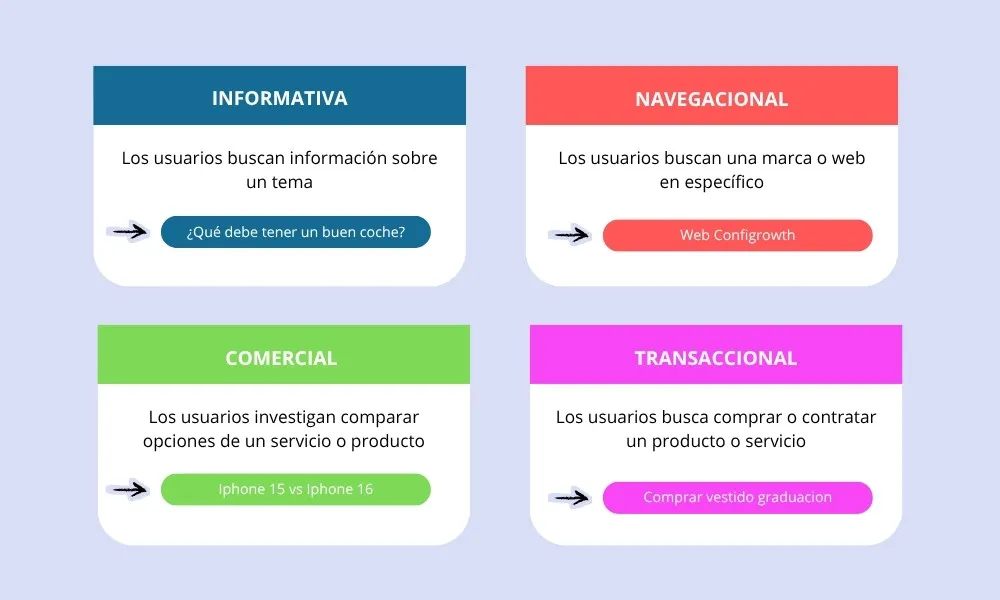
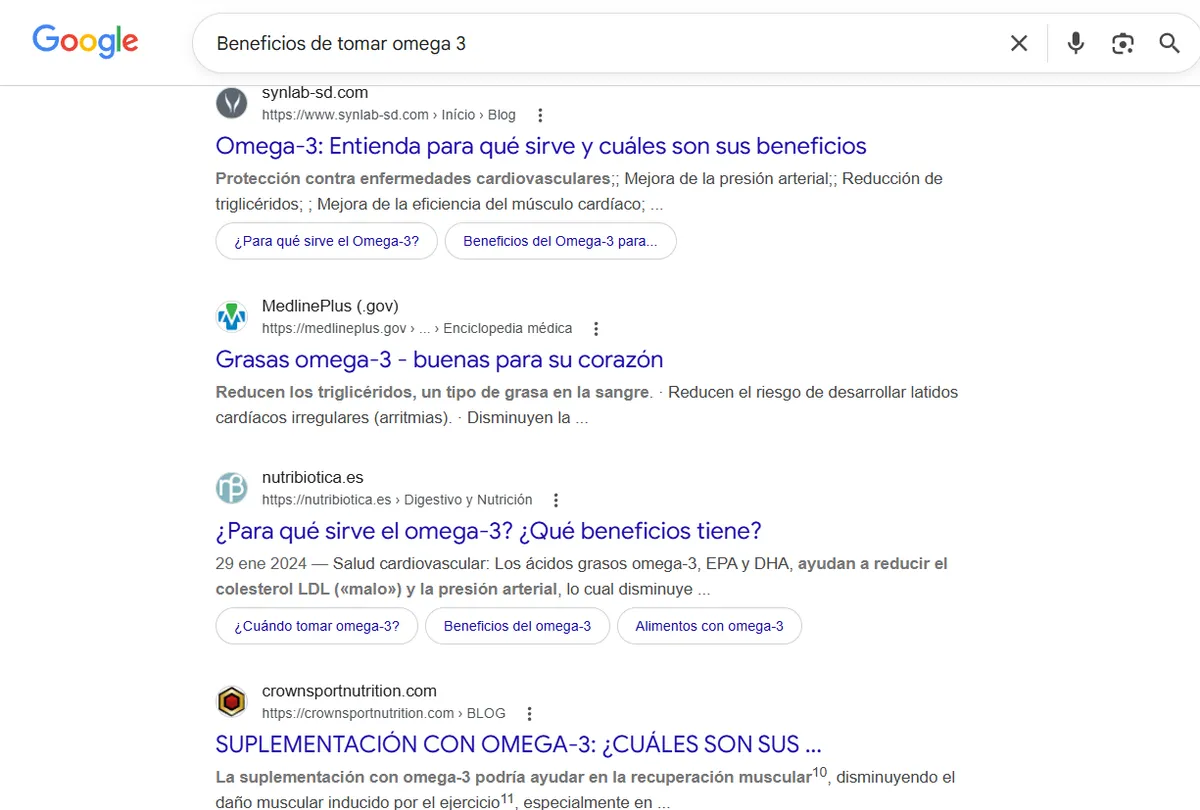
Informational intent
The user is looking to understand or learn.
Examples:
- Benefits of taking omega 3
- How to fix a leaky faucet
- What is SEO
Content that usually wins: guides, tutorials, checklists, glossaries.
Navigational intent
The user wants to get to a specific brand or resource.
Examples:
- Gmail login
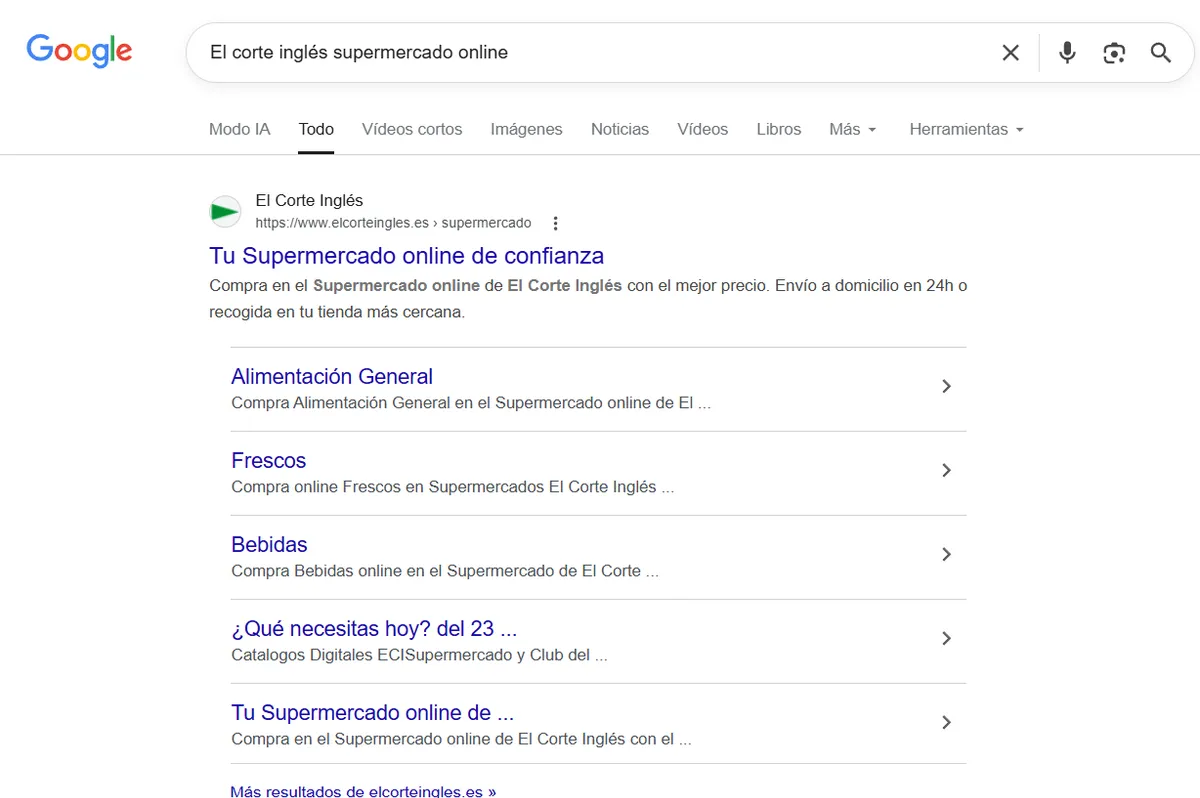
- El Corte Inglés online supermarket (El Corte Inglés is a Spanish department store chain)
- Zara
Content that usually wins: official pages, login pages, brand resources.
Commercial intent (research)
The user is evaluating options before deciding.
Examples:
- Best SEO agency
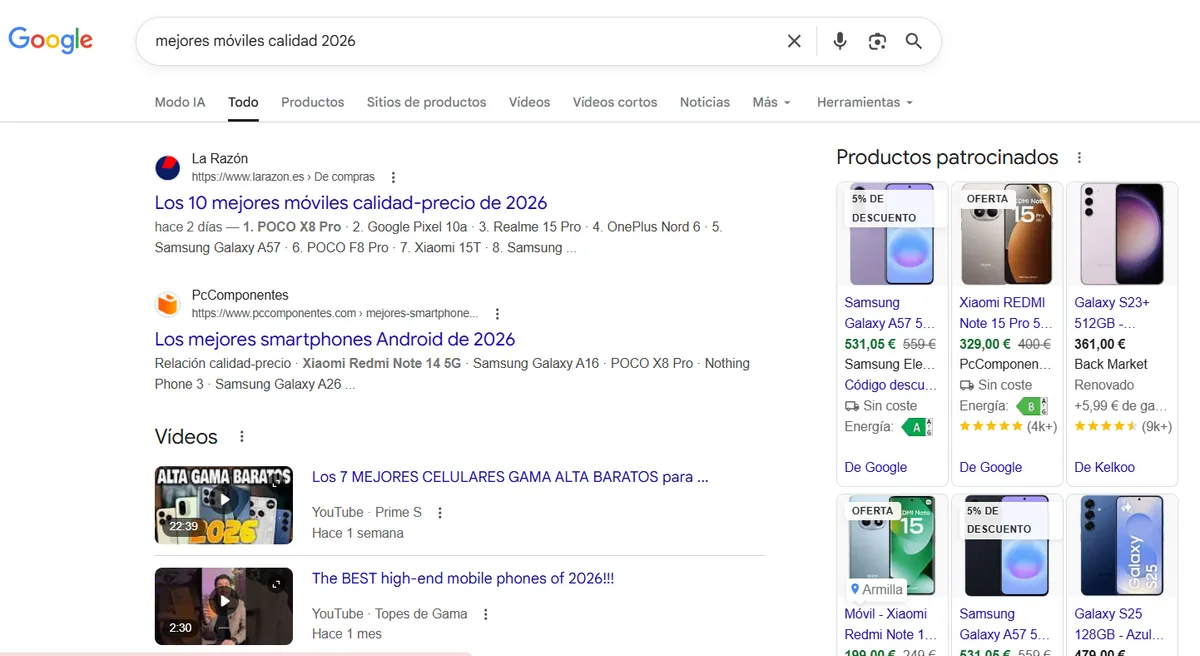
- Best quality phones 2026
- Air fryer reviews
Content that usually wins: comparisons, rankings, alternatives, reviews, benchmarks.
Transactional intent
The user is looking to hire or buy.
Examples:
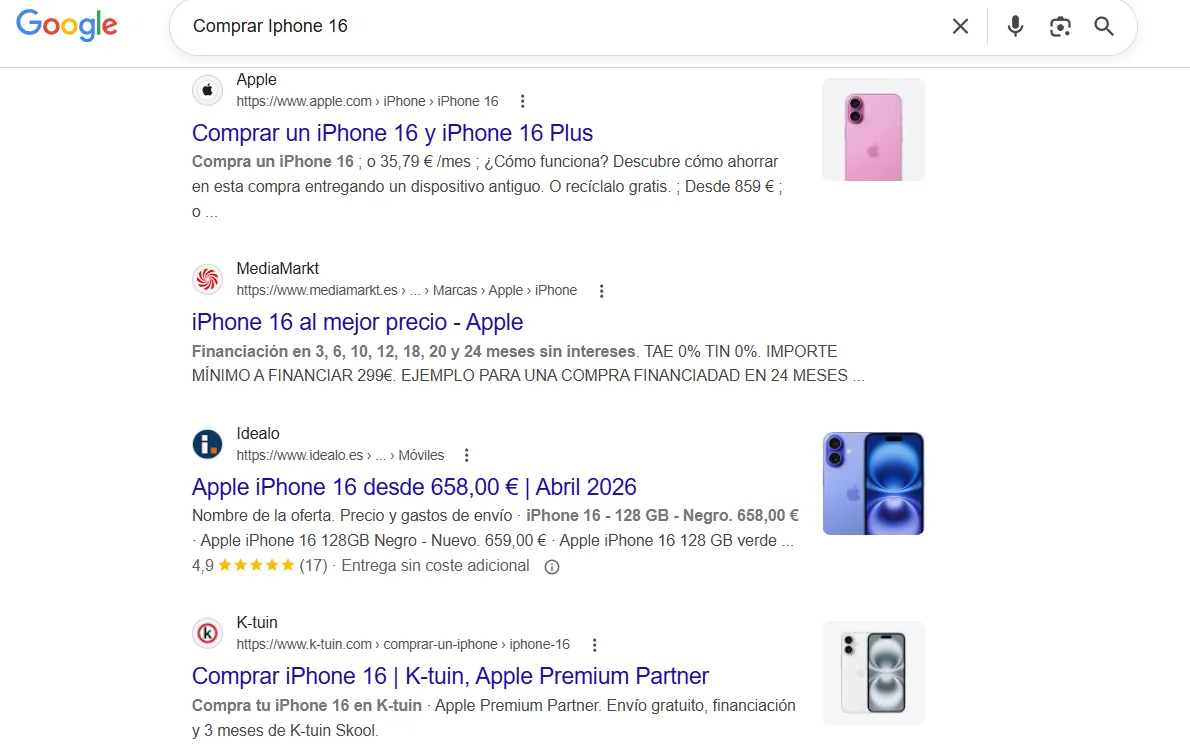
- Buy iPhone 16
- Buy pink Nike sneakers
- Amazon wireless headphones
Content that usually wins: landing pages, service pages, product pages with a direct CTA.
Local intent and mixed queries
The user needs a solution in a specific place, or the query returns a hybrid SERP.
Examples:
- Brunch near me
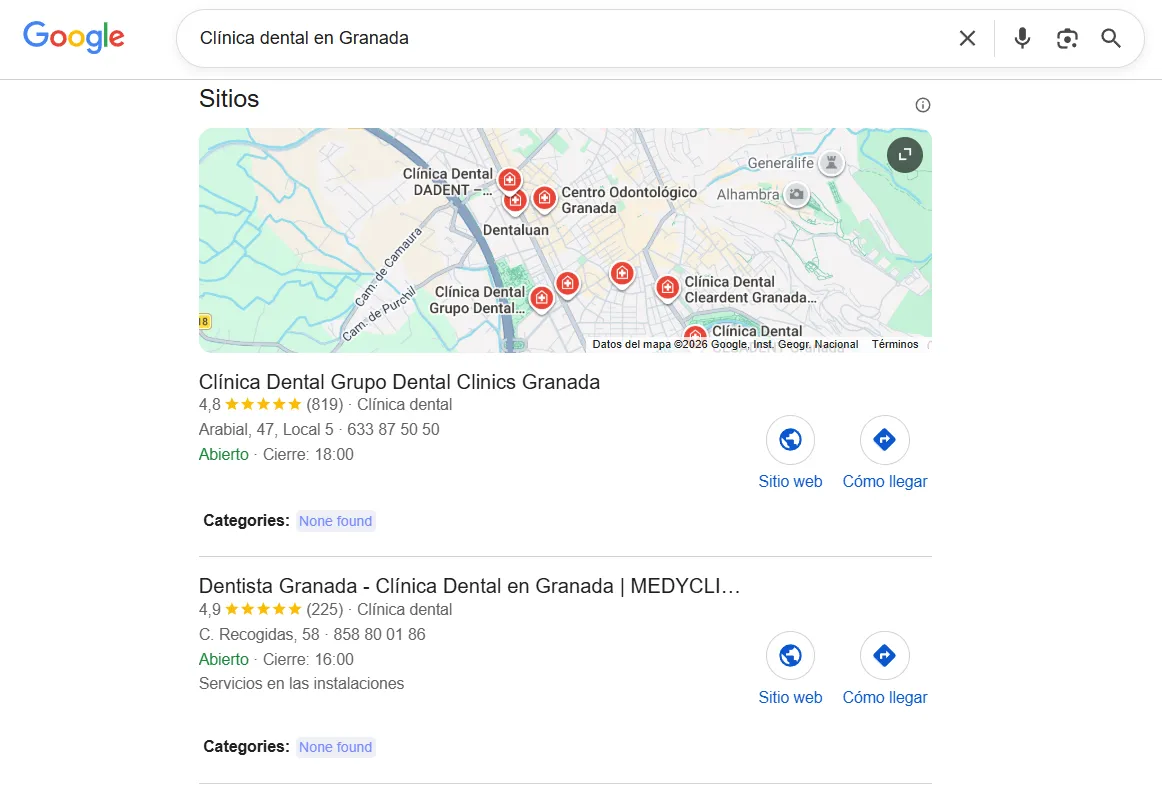
- Dental clinic in Granada (Spain)
With mixed queries, the SERP usually blends guides + services + a map. In that scenario, your strategy should adapt to the dominant intent and guide people toward the next stage.
How to analyze search intent step by step
1) Analyze the SERP: snippets, videos, categories and maps
Check:
- Features (snippet, PAA, video, carousels).
- Whether a local map is present.
- Types of pages dominating the top results (blog, category, service, marketplace).
Working rule: if the top 3 are guides, a pure landing page usually doesn’t compete; if the top 3 are landing pages, a long guide usually stays out.
2) Spot keyword modifiers and buying signals
Modifiers help you form a hypothesis:
- Informational: “what,” “how,” “guide,” “examples”
- Commercial: “best,” “vs,” “reviews,” “alternatives”
- Transactional: “price,” “hire,” “quote,” “buy”
- Local: city/neighborhood, “near me,” “hours,” “phone number”
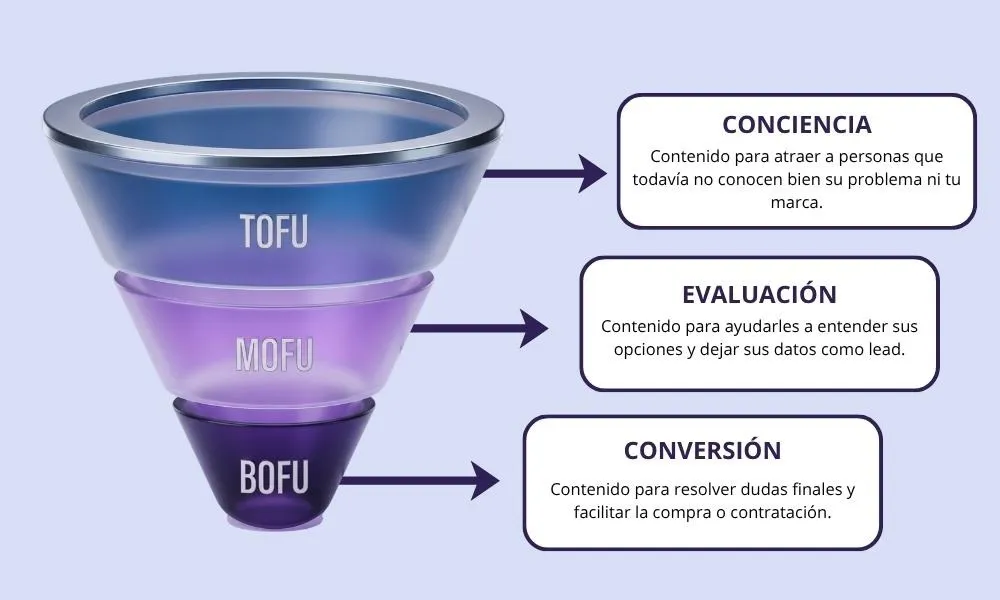
3) Classify the search as TOFU, MOFU or BOFU (experience)
Connect intent with the funnel:
- TOFU: discover and understand (informational).
- MOFU: compare and validate (commercial).
- BOFU: decide and act (transactional).
At ConfiGrowth we use this classification to prioritize initiatives by real impact on pipeline, not by theoretical volume.
4) Validate with GSC and GA4 data
In Search Console:
- Real queries per URL.
- CTR vs. position (low CTR at a good position usually points to a snippet or intent mismatch).
In GA4:
- Engagement and quality signals.
- Conversions (leads, calls, purchases) and paths (guide → service).
What content to create for each search intent (experience)
Blog post, landing page, category or service page
| Intent | Recommended format | Goal | Typical CTA |
|---|---|---|---|
| Informational | Guide / tutorial | Satisfy and educate | Resource, subscription, “see solution” |
| Commercial | Comparison / ranking | Convince and filter | Demo, audit, contact |
| Transactional | Service/product landing page | Convert | Quote, call, purchase |
| Local | Local landing page + local SEO | Capture nearby demand | Call, book, WhatsApp |
“Answer-first” structure for SEO and AEO
Start every section with a direct answer and then expand with:
- evidence (SERP / examples),
- explanation,
- steps and recommendations.
Using entities, FAQs and tables to cover intent
- Entities: tools, concepts, metrics, brands.
- FAQs: common objections (especially MOFU/BOFU).
- Tables: comparisons and checklists (high value for the user and for extraction).
Common mistakes when working with search intent
Choosing a URL that doesn’t answer the intent
Publishing a landing page for an informational query (or vice versa) usually prevents ranking or attracts unqualified traffic.
Mixing several intents on one page
A URL that tries to be a guide + a comparison + a landing page tends to lose focus and performance.
Prioritizing traffic over conversion (experience)
If your goals center on sessions/impressions, you’ll end up optimizing for noise. The criterion should be business impact and acquisition efficiency.
Ignoring SERP changes and cannibalization
Intent can change over time. If you don’t review the SERP and the site architecture, you get:
- cannibalization,
- ranking fluctuations,
- declining CTR with no apparent cause.
Checklist to align intent, content and business
What to review before publishing
- The SERP rewards the format you’re about to create.
- There’s one primary intent defined per URL.
- The content answers directly and completely.
- Supporting elements (examples, FAQ, table/checklist) are there where they add value.
- There’s a logical next step (a CTA that fits the funnel stage).
Key metrics: CTR, engagement and conversion
- CTR (GSC): snippet fit and perceived intent.
- Engagement (GA4): real user satisfaction.
- Conversion: business impact (leads/sales).
Frequently asked questions about search intent
How do I tell commercial intent from transactional intent?
The difference is simpler than it looks: with commercial intent the person is comparing, with transactional intent they’re ready to act.
If someone searches “best car insurance,” they’re usually evaluating options: coverage, reviews, ballpark prices and which one suits them.
If they search “buy car insurance online,” on the other hand, they don’t want to research as much: they want to close the deal, see the terms and complete the sign-up.
When in doubt, keep it simple: open the SERP. If Google shows you comparisons and rankings, it’s commercial. If it shows service landing pages, pricing pages or categories, it’s transactional.
How many intents can a keyword have?
Sometimes a keyword has more than one intent, because different people can search for the same thing for different reasons. In practice, though, Google almost always picks one dominant intent and builds the SERP around it.
For example, a search can look transactional, but if Google understands that most users need information first, you’ll see guides and comparisons at the top. In that case, even if you want to sell, the smartest move is to win first with the format Google rewards and then lead the user to the next stage with links, CTAs and bridge content.
Keep in mind you don’t need to cover “everything on one page.” You need every URL to have a clear goal and your site to guide the user step by step.
Can you change the intent with content?
You can… but it’s usually not the best battle to pick.
Trying to change the intent is like pushing a sale while the person is still asking questions. It sometimes works if you have a lot of brand authority and a very strong offer, but Google will normally keep showing what best satisfies the average user.
That’s why the most profitable move is almost always to adapt to the real intent: you create the content the SERP is rewarding and build the path to conversion inside it. That way you don’t depend on “convincing Google” but on using content as a system: you inform, build trust and lead to action naturally.
Why does a page rank but not convert?
Because ranking and converting don’t always happen at the same point in the process.
You may be attracting visits with an informational intent (people who want to understand), while your page is written as if the user were already ready to buy. The result: the content works for Google, but not for your business.
It also happens a lot when the content is fine, but the user finishes reading and thinks: “OK, so now what?” There’s no clear next step, or the CTA comes too early, or it sounds too aggressive for where the person is.
The fix is usually to adjust the “bridge” to the intent:
- If it’s TOFU, offer a soft step (a downloadable resource, checklist, example, diagnostic).
- If it’s MOFU, resolve objections and help them compare (case studies, proof, alternatives, criteria).
- If it’s BOFU, reduce friction and go straight to proposal + trust + action.